On the Same Side of the Table: Sales Lessons About Trust from Alex Hormozi
I'm new to selling. Here's why I now think trust is the most important step in a sale, and how I'd earn it while letting people choose.
During a busy launch at his gym, Alex Hormozi ran out of one of the supplements on his list. Instead of skirting around it, he told the customer she could get it cheaper down the street at Costco. She bought the rest of what he recommended. Hormozi says the same thing happened with the other customers he tried it with (about one minute into his video, linked at the end).
That story stuck with me. How does sending a customer away make them trust you more?
I'd like to have my own business one day, and entrepreneurs I follow keep saying that knowing how to sell matters more than building the product. So I searched YouTube for "how to sell," and this video was one of the most popular results.
Six ways to keep a sale focused on the customer#
I've combined and adapted the video's ideas into six steps.
01Build trust first
What I took from the video is that trust matters more than any single sale. When people trust you, they come back when they need something similar, and they recommend you to friends and family.
How be honest when you aren't the best option. If someone can get an item cheaper elsewhere, or doesn't need it at all, tell them. For example, many people pay for a phone, data or token plan without knowing that a cheaper one would do the same job.
02Understand what they need
The better you know someone, the better you can help them, and the better your solution fits.
How ask about their daily routine, and fit what you offer into something they already do. Hormozi's point is that building a new habit is hard, but attaching to one they already have is much easier. If what you offer really helps, it becomes part of their routine.
03Let them decide, starting small
In my view, pressure works against trust. A small first yes, freely given, makes the next step feel natural.
How ask "Does this sound like what you need?" Then offer one small, easy first step, like a sample, a trial or a starter pack.
04Respect their budget
The customer should leave with something that works for them, without feeling judged.
How when something is too expensive, drop the least important parts first, and remind them what each part would have solved. Instead of telling people how to spend their money, look for a cheaper alternative that does the same job.
05Stay on their side
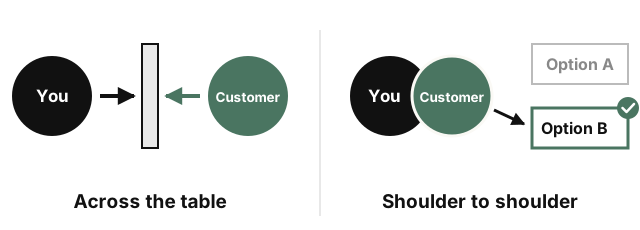
For me, this ties everything together. Hormozi describes the goal as moving from across the table to "shoulder to shoulder," looking at the decision together. You don't need to be physically next to anyone. It's a mindset, and the other person needs to feel it.
How before an important conversation, ask yourself what a good outcome looks like for them.
06Keep practicing
We learn by doing and get better through many repetitions.
How practice often, and keep a few profiles of the kinds of people you talk to, with an approach for each. In a conversation, work out which profile fits, then adjust. Improve, add or remove profiles as you learn.
Not only for selling#
Even if you don't sell anything, you probably sell ideas sometimes. A conversation with a manager or with family members is a kind of selling, and these steps can help there too. I think a selling mindset can help all of us, not to push ideas on people, but to help them decide well.
“The difference between manipulation and help is intention.”
Hormozi's tactics, and where I'd adapt them#
| Step | Hormozi's tactic | What I'd do |
|---|---|---|
| 1. Build trust first | Ghost products: send customers elsewhere for some items | Keep it; I'm unsure about partnerships |
| 2. Understand what they need | Tie the product to a habit | Use it as it is |
| 3. Let them decide, starting small | Use the card on file | Adapt it for new customers |
| 4. Respect their budget | Find money in "old identity" spending | Look for a cheaper alternative instead |
| 5. Stay on their side | Shoulder to shoulder | Keep it as it is |
| 6. Keep practicing | Lots of small, fast sales | Practice often, with a few customer profiles |
Ghost products (step 1)
After the Costco moment, Hormozi started sending customers elsewhere for some items on purpose, and calls these items "ghost products." His condition: "the difference between manipulation and help is intention."
One extension I'm unsure about is partnering with a provider that sells cheaper but still good products. I wouldn't sell their products myself. I'd name them, give two options, and let the customer decide. But if I benefit from the partnership, pointing people there is no longer against my own interest, and that might change the trust.
Tie it to a habit (step 2)
His example: if they brush their teeth every morning, keep the product next to the toothbrush. I'd use it as it is.
The card on file, for new customers (step 3)
Hormozi closes by asking whether the customer wants to use the card they have on file, so there's no new decision to make. His gym members already had a card saved. For a new customer, here's my proposed adaptation. I haven't tested it:
- Explain the benefit, how to use it, and how it fits their routine.
- Ask whether it's what they need.
- Offer a small first yes: a sample, a trial or a starter pack.
- Make it easy: pay on the spot, send a link, or book the next step.
- With their permission, save their payment card for next time.
- Follow up. If it works for them, they come back and tell others.
If a free trial needs a card, say up front what it costs and when, send a reminder before the first charge, and make it just as easy to cancel.
"Old identity" spending (step 4)
Hormozi also helps customers find money in habits from their "old identity," like going out or drinking. I'd rather not judge how people live, so I'd look for a cheaper alternative instead, unless the customer brings up their own habits.
Shoulder to shoulder (step 5)
I'd keep this one as it is. For me it's less a tactic than the reason the others work.
Lots of small sales (step 6)
Hormozi suggests working somewhere with many cheap, fast sales, like a car wash or a nail salon, to get lots of practice.
Watch the video#
If you'd like to hear it from Hormozi himself, the video is eight minutes: My Best Sales Tactic (to Make a TON of Money).
What's next#
Some of these steps might not work in every situation, and real practice will teach things this video doesn't cover. If you try one, I'd love to hear how it went: what worked, what didn't, and what you'd change.
Which of these would you try first, and where? Or where have you seen trust make or break a sale? Share your story in the comments below, or reach out to me directly through my contact page. Your findings might help other readers too.
Comments